Shift Planning & Fairness Tool
Manual Excel scheduling created friction, data gaps, and subjective shift allocation. As Product Owner I defined a fairness-first scheduling tool and shipped a working prototype with a remote dev team.
Context & Problem
Shift planning was handled manually through Excel sheets and fragmented messaging. This created inconsistency, data gaps, and unnecessary administrative load for managers.
✕ Manual, error-prone scheduling processes.
✕ Subjective shift allocation based on memory rather than data.
✕ No link between occupancy demand and staffing levels.
✕ Delayed communication leading to operational friction.
My Role: Product Owner
I identified the operational bottleneck and defined the product requirements. I prioritized features based on immediate operational impact (fairness & transparency) and coordinated with a remote development team to build a functional prototype.
Proposed Solution
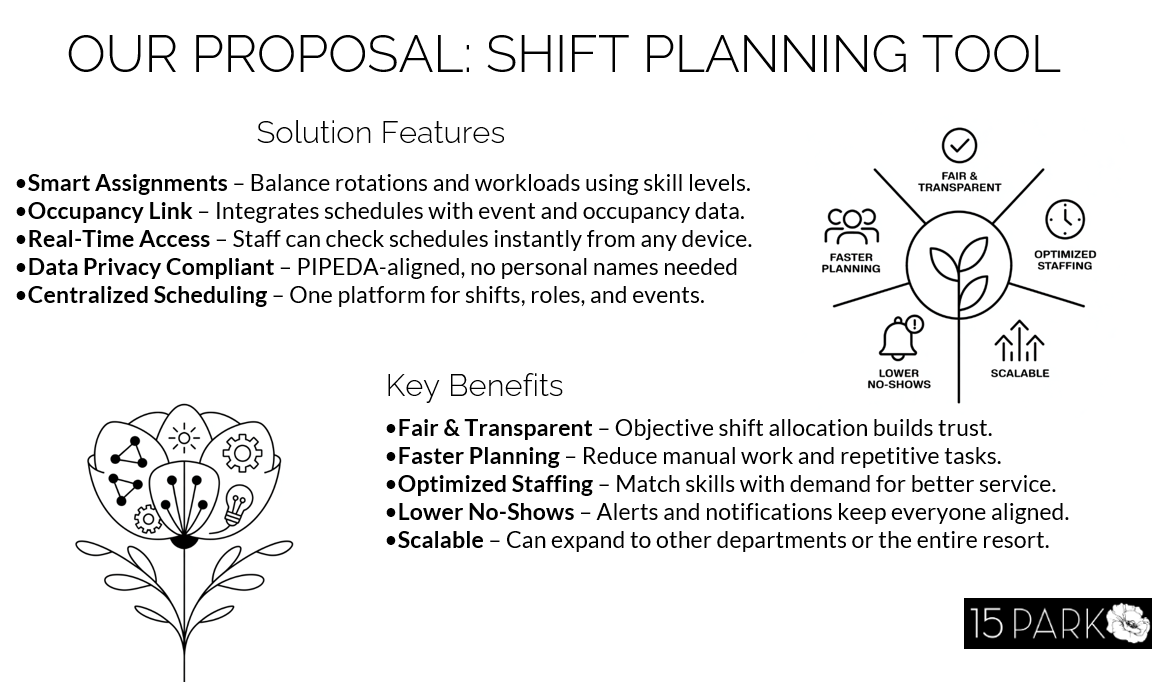
▹ Smart Assignments: Algorithm to suggest shifts based on staff availability and skill level.
▹ Occupancy-Aware: Staffing levels adjusted automatically based on event data.
▹ Real-Time Access: Cloud-based view for staff to see hours instantly.
▹ Privacy-First: PIPEDA-aligned design with minimal personal data exposure.
Prototype Visuals
Early functional prototype validating fairness, transparency, and operational feasibility.
Product Walkthrough (Early Prototype)
Short walkthrough recorded during development. The focus is on product logic and operational flow rather than polished delivery.
*Audio available in English.
Outcome & Mindset
This project demonstrates my approach to operations: I don’t just “manage” problems; I analyze their root cause and build scalable systems to solve them. Whether using Python, Excel, or coordinating a dev team, my goal is always operational clarity and fairness.