Service Design & Operations Transformation (CART)
Internal HR requests arrived through scattered, disconnected channels with zero traceability. I redesigned the operation as a structured internal service — single intake, classification logic, and SLAs.
Internal HR services redesigned as a scalable, structured system.
This project addressed the challenge of transforming a reactive internal service model into a structured, predictable operation. By applying product thinking and system design principles to internal human resources requests, we moved from ad-hoc responses to a defined service architecture.
Context & Problem
The existing model was characterized by high friction and limited visibility. Requests arrived via multiple, disconnected channels—email, chat, hallway conversations—creating a reactive environment with no centralized traceability or clear prioritization logic.
This lack of structure led to perceived slowness, inconsistent service delivery, and high frustration for both internal customers and the operational team. The core issue was clear: “The problem was not the people; it was the absence of a coherent system.”
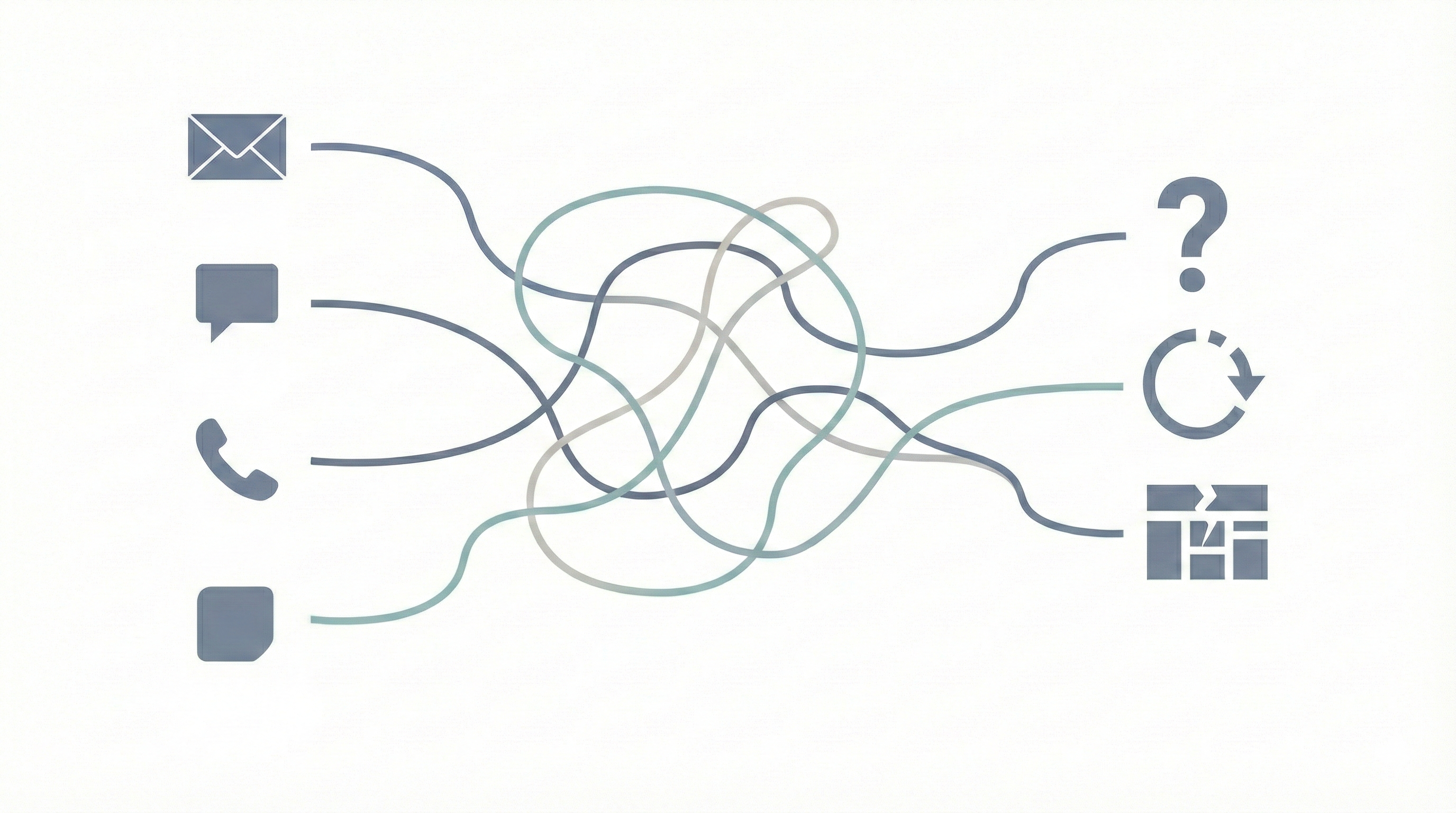
Visualizing the shift from unstructured noise to a managed service flow.
Role & Responsibility
I took on a lead service design role, bridging the gap between operational needs and user experience. My primary responsibility was translating unstructured internal demand into a manageable system architecture.
▹ Problem Framing: Root cause analysis of service bottlenecks.
▹ End-to-End System Design: Defining how requests enter and move through the organization.
▹ Process Structuring: Aligning operational processes with technological capabilities.
Diagnosis & Discovery
We moved beyond anecdotal evidence by analyzing actual request volume and types. The discovery phase revealed significant rework caused by unclear initial requests and a persistent mismatch between implicit user expectations and actual operational capacity.
This diagnosis shifted the organizational focus from merely managing noise to structuring the demand itself.
The CART Model
The solution was the CART Model—a framework designed to create order and predictability out of operational chaos. It was not merely implementing a help desk tool; it was defining the logic that governed the entire service.
The model established a single intake channel, standardized request classification, assessed criticality based on business impact, and automated routing to the correct specialist teams. This structure was the prerequisite for establishing defined response expectations (SLAs).
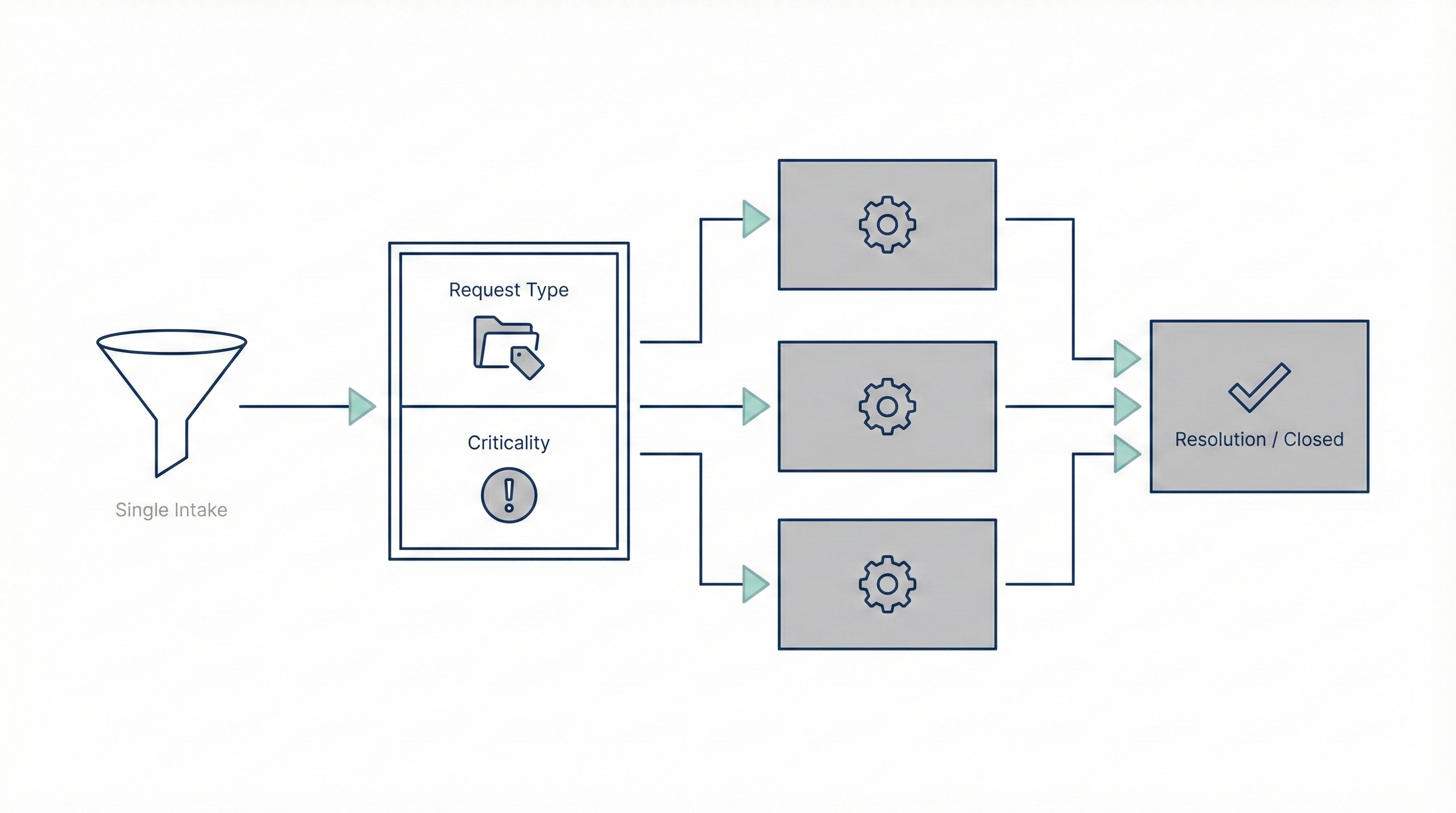
The CART Framework: Classification, Assessment, Routing, and Tracking logic.
Service Catalog & Implementation
To reduce friction, we formalized offerings into a clear internal service catalog. We applied a prioritization framework adapted for operations—prioritizing legal and contractual obligations first, followed by operational continuity tasks, and finally, informational requests.
The implementation approach was tool-agnostic and model-first. We prioritized defining the service model, workflows, and operational structure before configuring automation rules. The technology served the system design, not the reverse.
Measurement & Impact
Control & Visibility
Established key indicators: Volume by request type, end-to-end response times, and SLA compliance. The operation shifted from “busy” to measurable.
Trust & Predictability
Reduced dependency on personal relationships. HR stopped being a “black box” and became a reliable, transparent internal service provider.
Why This Project Matters
“This project demonstrates the ability to apply product thinking beyond software. It highlights expertise in designing holistic services, translating complex human workflows into scalable systems, and balancing user experience with operational reality.”